Who would have thought the coffee grounds you mindlessly dump every morning might hold the key to fighting climate change and revolutionizing the construction industry? Prepare to see your favorite morning ritual in a whole new light!
The Marvels of Coffee Grounds: More Than Just Waste
Coffee grounds have long enjoyed a proud second life. In the beauty aisle, they’re known to help with fat destocking, banishing orange-peel skin, and fighting off those dreaded dark circles. Around the home, they neutralize stubborn smells in the fridge, worktop, or even the toilet (no judgments). And let’s not forget their starring role in the garden, boosting plant growth as fertilizer or scaring off mosquitos and other pesky critters. That’s quite an impressive résumé for a humble breakfast by-product.
A Surprising Breakthrough Down Under
But recently, a group of Australian scientists stumbled upon an entirely new use for coffee grounds—and it’s a game changer. Researchers at RMIT University made a discovery that might make you look at your latte differently: coffee grounds could strengthen concrete by a remarkable 30%. That’s right, the stuff at the bottom of your cup could soon be helping hold up bridges, buildings, and more.
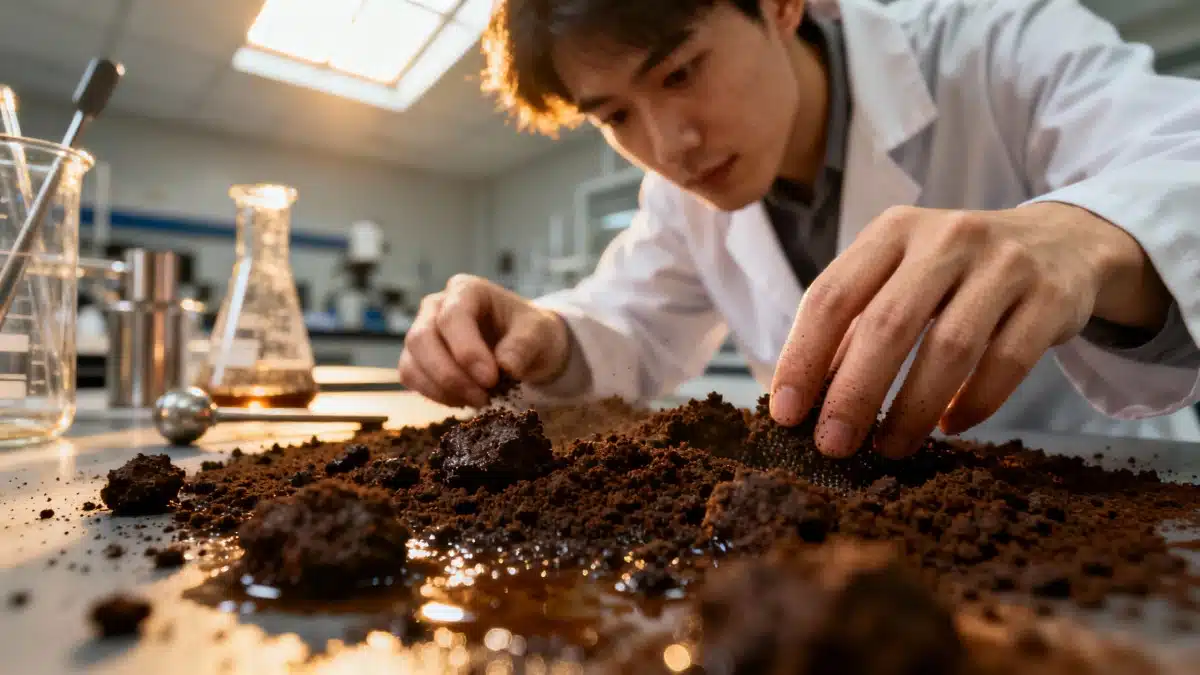
The key? Transforming used coffee grounds into biochar—a type of charcoal—then substituting 15% of the sand in traditional concrete with this coffee-derived ingredient. The results, published in the Journal of Cleaner Production in September 2023, are enough to make even the most seasoned engineer perk up: concrete made this way becomes 30% stronger.
And the benefit isn’t just strength. By recycling coffee waste into the mix, we cut down on the enormous mountains of organic waste heading straight to landfill. Plus, we spare the earth some of the toll of sand extraction for concrete production—a major environmental headache worldwide.
Global Impact: From Local Cafés to Worldwide Change
Why does this matter? The scale is mind-boggling. Australia alone produces around 75,000 tonnes of ground coffee waste each year. France? Roughly 400,000 tonnes. The world? Not less than 7 million tonnes—annually. That’s a lot of potential building material. As Kilmartin-Lynch from the RMIT team points out, the concrete industry holds huge potential to ramp up the recycling of organic waste such as used coffee.
There’s more than landfill savings at stake. According to RMIT’s Rajeev Roychand, disposing of organic waste creates an environmental challenge—it gives off large amounts of greenhouse gases, notably methane and carbon dioxide, both infamous contributors to climate change. With the coffee biochar solution, countless tonnes of used grounds could be recycled and the need for vast sand extraction minimized. The scientists’ mission is clear: take care of the land and ensure a sustainable lifecycle for all materials. Their main aim? Make sure things aren’t just mindlessly dumped, thus lessening environmental impact.
From the Lab to (Maybe) Your Walls
Of course, before you start spreading espresso grounds on your future kitchen walls, a little patience is wise. The scientists are still testing just how solid and durable this new coffee-laced concrete remains in the long run. But who knows—a future where your home contains a little hint of your morning roast might not be far off!
- Coffee grounds already help with beauty, odor control, and gardening.
- Australian researchers at RMIT discovered that turning coffee waste into biochar and adding it to concrete increases strength by 30% when it replaces 15% of the sand.
- The process could significantly cut landfill waste and the need for delicate natural sand extraction, both wins for the planet.
- Globally, over 7 million tonnes of used coffee could be recycled into the construction industry each year.
- Less landfill waste means fewer emissions of greenhouse gases like methane and CO2, addressing a root cause of climate change.
- Scientists are now studying the long-term durability of this blend, aiming for a sustainable life cycle for all materials and a reduced environmental footprint.
In short, your morning coffee isn’t just a pick-me-up. In the hands of clever scientists, it’s shaping up as a real-life eco-hero. So next time you toss those grounds, remember: what’s left in your filter just might help build a greener future. Time to savor every drop… and maybe every scrap, too!

Based in New York, Josh is the creative mind behind Lanco Handmade Furniture.
Passionate about timeless design and fine craftsmanship, he transforms high-quality materials into pieces that are both functional and artful.
With a keen eye for detail and a love for natural textures, Josh creates furniture meant to bring warmth, character, and lasting beauty to any space.