Baking soda – the beloved darling of every eco-conscious cleaner’s arsenal. But could your faithful box of white powder actually be doing more harm than good to your daily routine? Behind the reputation of magic lies a more complicated truth, as revealed by Raphaël Haumont, molecular gastronomy researcher and lecturer. Let’s bust some myths and see if you’ve been falling for these three classic baking soda mistakes at home.
Mistake 1: Treating Grease Stains with Baking Soda (or Vinegar!)
- Sprinkle it on a greasy countertop, table, or fabric…
- Mix it into a paste and scrub, hoping that cloud of white will banish oily nightmares…
If this sounds familiar, you’re in good company. Many recommend this method for conquering kitchen grease. But Haumont drops the hammer: it just doesn’t work. Here’s why: baking soda (sodium bicarbonate) is a salt. And there are just some things salts don’t get along with – fat is one of them. In fact, salt isn’t even soluble in oil.
To remove greasy stains from surfaces or clothes, you need an agent that gets along with both water and oil. Enter dishwashing liquid, that humble bottle next to your sink. This cleaning hero contains molecules that “love both water and oil,” meaning they can actually dislodge greasy spots and sweep them away. Baking soda? Not so much.
And if you thought vinegar could save you, think again. Vinegar, like baking soda, does not dissolve in oil. So, for grease, put away both the powder and the bottle, and reach for dish soap instead – your stains will actually vanish instead of just moving around.
Mistake 2: Relying on Baking Soda to Eliminate Fridge Odors
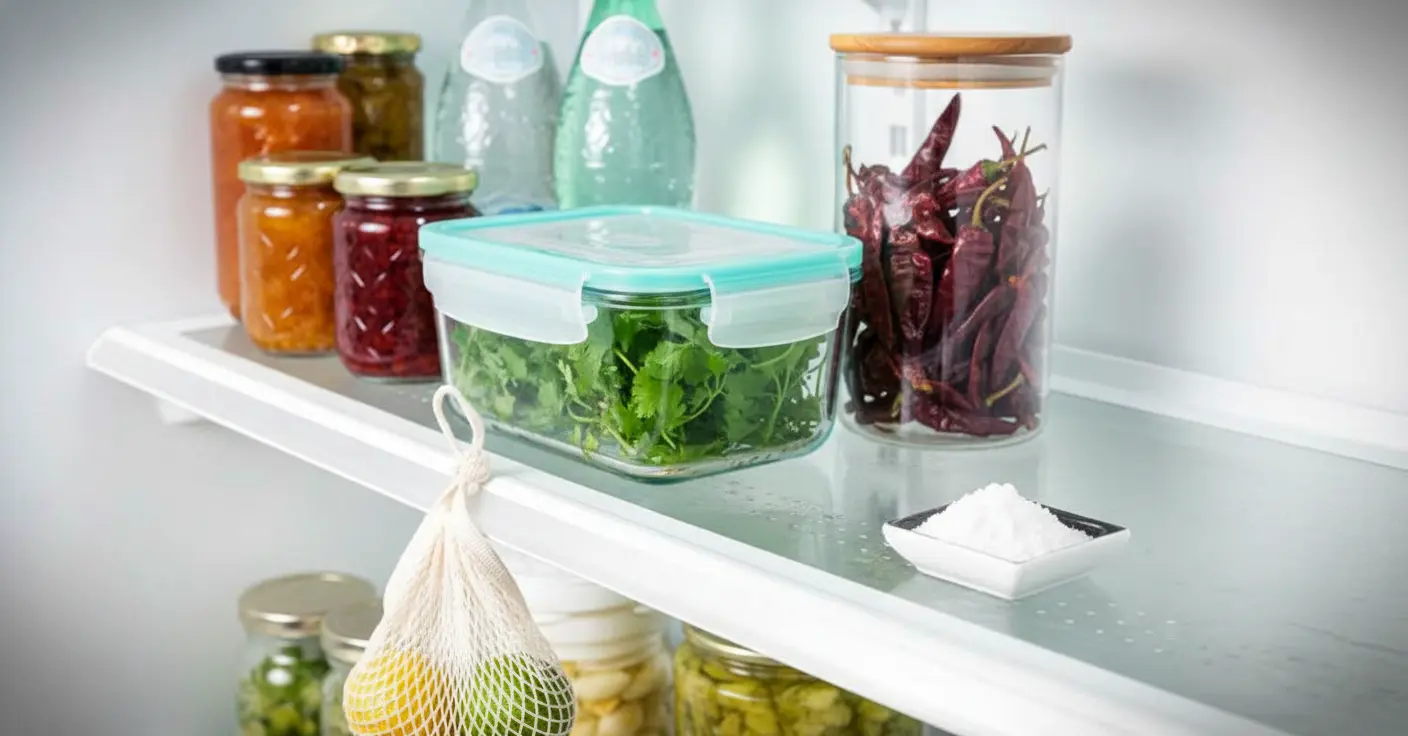
The fridge problem: cheese, fish, last night’s leftovers – your fridge might develop a “perfume” that would knock a skunk sideways. The classic trick? Pop a bowl of baking soda in the center and hope for sweet freshness. According to Haumont, this isn’t quite the miracle you might expect.
Again, the science: baking soda is a salt, and “odors, or aromatic molecules, are often soluble in fat.” That explains why butter absorbs fridge smells so readily. While baking soda – or even coffee grounds or activated charcoal – can mop up some gases, moisture, and a handful of surface smell molecules, their effect is limited and often insufficient.
- Surface absorption of some odors? Yes, to a limited extent.
- Complete removal of lingering fridge funk? Not likely.
So what’s the gold standard for a fresh-smelling fridge? Regularly clean with soapy water and store food in airtight containers. Simple. Boring. But effective.
Mistake 3: Using Baking Soda on Red Wine Stains
Panic moment: you knock over a glass of red wine, and instinctively reach for the baking soda. Is this wise? Sorry – unless you like your stains to change color without disappearing, this is another myth.
When baking soda meets red wine, two reactions occur. First: fizzing! Wine is acidic, and as the scientist neatly puts it, “acid + baking soda = foam.” Second, the pigments in grape skins (responsible for that glorious red) are sensitive to acidity. In wine (acidic), pigments are red, but when they hit baking soda (alkaline), they turn blue or even brown.
The end result? You’re just changing the color of the stain – not removing it. Want an effective solution (and don’t have fine sand lying around your garden to absorb liquid)? The best way is to use undiluted dishwashing liquid. Let it sit for about ten minutes, then toss the item straight in the washing machine. The wine stain has finally met its match.
Conclusion: Time to Re-Evaluate Your Baking Soda Rituals?
It’s tempting to believe in a one-size-fits-all cleaning wonder. Baking soda certainly deserves a seat at the table, but as Raphaël Haumont points out, it’s far from a panacea. For grease: embrace your dish soap. For fridge funk: reach for airtight containers and soapy water. For wine stains: let the washing machine and a squirt of dish soap work their magic.
Bottom line: Baking soda is clever, but science is smarter. Next time you’re about to reach for that powdery box, remember these three mistakes and clean with confidence—and a little more effectiveness!

Based in New York, Josh is the creative mind behind Lanco Handmade Furniture.
Passionate about timeless design and fine craftsmanship, he transforms high-quality materials into pieces that are both functional and artful.
With a keen eye for detail and a love for natural textures, Josh creates furniture meant to bring warmth, character, and lasting beauty to any space.