
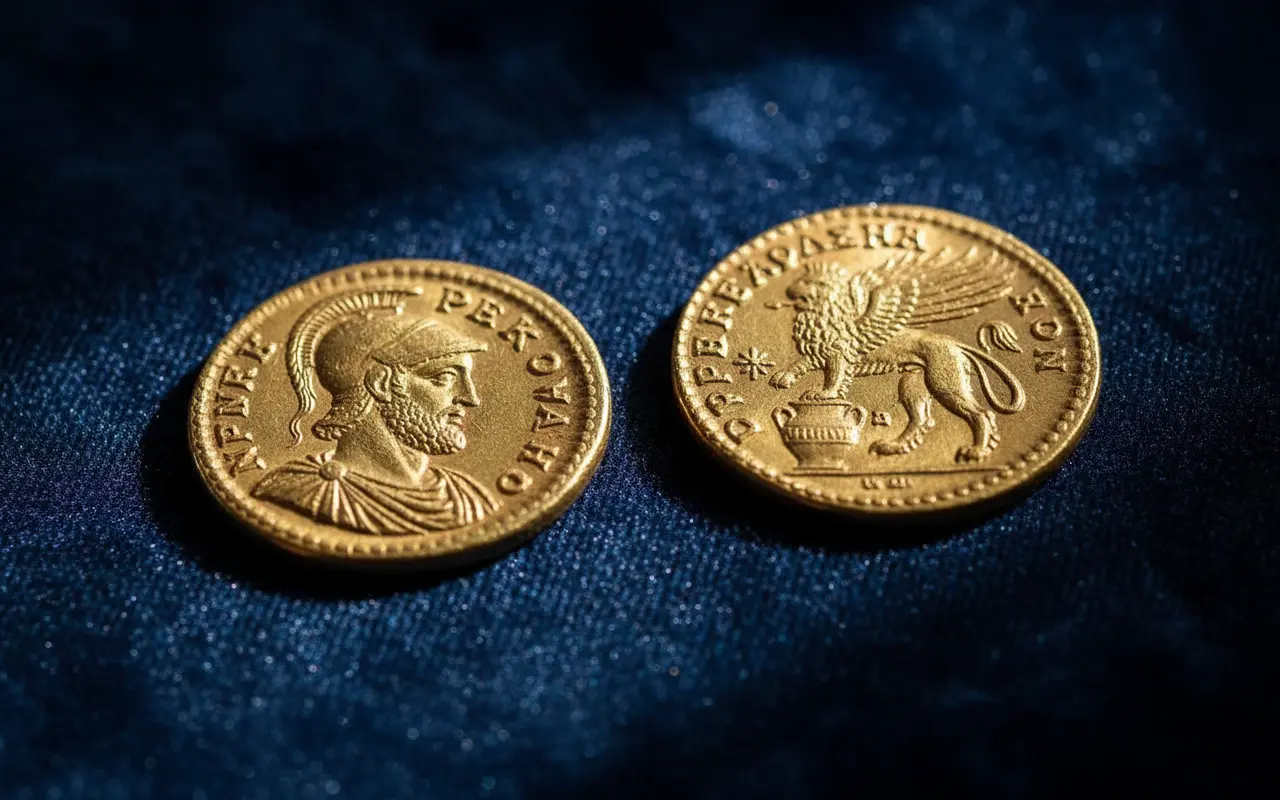
It’s not every day that a piece of history as small as a fingernail turns the archaeological world upside down – but that’s exactly what happened in Jerusalem’s City of David. An extraordinarily rare gold coin, over 2,200 years old, was unearthed at the Givati Parking Lot excavation, stunning experts and breathing new life into our understanding of ancient Jerusalem’s past.
A Rare Glint from the Distant Past
The star of this discovery is a tiny quarter-drachma coin, crafted in nearly pure gold – an impressive 99.3%, in case you’re craving specifics. This dazzling relic dates from approximately 246 to 241 BCE, during the reign of Ptolemy III of Egypt and his formidable queen, Berenice II. To put its rarity in perspective: only about 20 examples of this coin type are known worldwide, and this is the very first one ever found outside Egypt. Archaeologists weren’t just thrilled – they were positively flabbergasted.
This is also the first time that such a coin has emerged from a controlled archaeological context, providing scholars with invaluable insight and solid provenance. Previously, similar coins surfaced only in Egypt, the heartland of Ptolemaic power, making this Jerusalem find even more ground-breaking (pun absolutely intended).
The Queen on the Coin: Not Just a Face in the Crowd
Let’s take a closer look at this remarkable artifact. One side (the obverse, for the numismatically inclined) features Queen Berenice II. She’s presented with all the regal trappings: a diadem (move over, tiaras), a veil, and a necklace. But here’s the twist – Berenice isn’t depicted as a mere consort. Instead, she’s shown as a ruler in her own right, a departure from the era’s typical portrayals of royal women.
On the flip side, the coin’s reverse displays a cornucopia, the classical symbol of fertility and prosperity, flanked by two stars – as if Berenice’s status needed any extra celestial endorsement. Greek letters spell out “of Queen Berenice,” unmistakably naming her as the star of the show. In a time when queens were usually assumed to be background figures, this coin makes it clear: Berenice II was nobody’s sidekick.
War, Reward, and Remaking a City’s Story
The quarter-drachma is believed to have been struck in the grand city of Alexandria. It may well have served as a donative: a special reward for soldiers returning from the Third Syrian War, one of the Ptolemaic Kingdom’s most significant military campaigns against the Seleucid Kingdom of Syria. Pocketing nearly pure gold after a dangerous campaign? Not a bad way to say “welcome home.”
What makes the coin’s presence in Jerusalem even more intriguing is the light it sheds on the city’s history. For decades, accepted wisdom held that after the destruction of the First Temple in 586 BCE, Jerusalem was just a modest outpost with little influence or affluence. But this coin, accompanied by other finds from the mid-3rd century BCE, tells a different story – one where Jerusalem was more connected, vibrant, and significant than previously thought.
Berenice II: More Than Meets the (Ancient) Eye
Queen Berenice II led a life worthy of legend. Born around 267 BCE, she initially ruled Cyrenaica after her father’s death. Her marriage to Ptolemy III not only united two great domains but brought her homeland back under Egyptian rule. Berenice’s legacy is celestial as well as terrestrial: she was celebrated in the royal cult, honored as a goddess, and her famous dedication of a lock of her hair inspired the constellation Coma Berenices. Such a star-studded résumé is enough to make even today’s celebrities envious.
Tragically, Berenice’s reign ended suddenly and violently in 221 BCE, when she was assassinated on the orders of the regent Sosibius, shortly after her son’s ascent to the throne. Even in death, controversy and drama followed her name.
- The ancient gold coin’s features offer unique insights into female rulership in the ancient world.
- Its origins in Alexandria and connection to the Third Syrian War highlight the vast, interconnected world of Hellenistic empires.
- The unexpected discovery in Jerusalem rewrites stories of the city’s status during the period.
If you want to see this extraordinary coin (and perhaps channel a little ancient luck for your own purse), the quarter-drachma and other jewelry found at the Givati Parking Lot will be on display to the public this September at the 26th Annual City of David Research Conference. Sometimes, real buried treasure is only a parking lot away from rewriting history.

Based in New York, Josh is the creative mind behind Lanco Handmade Furniture.
Passionate about timeless design and fine craftsmanship, he transforms high-quality materials into pieces that are both functional and artful.
With a keen eye for detail and a love for natural textures, Josh creates furniture meant to bring warmth, character, and lasting beauty to any space.